

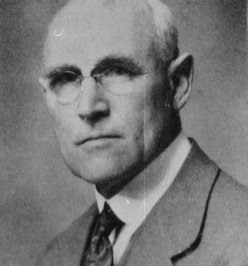


Mrs Fell-Smith lived at The Hill from 1922
She was a widow and in reality just plain Mrs Smith (wrongly adopting her late husband’s middle name ‘Fell’ and hyphenating it – sounded better in Sidmouth inter-war Society?)
She was born Florence Jane Neumann at Awliscombe 1860.
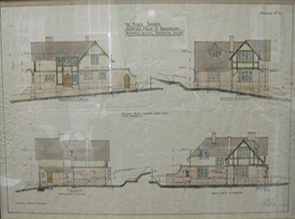
Sampson Society Appreciation Visit - 9 November 2010
Kings Acre was built in 1923.
The original plots of Bickwell Valley were fully developed in the first decade of the Twentieth Century.
Boughmore Road followed, but the pace of development was slow. This was mainly because the only access to the area until the mid 1920’s was via Boughmore Lane (now only a narrow footpath linking with Cotmaton Road).
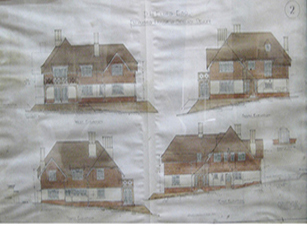
Sampson Society Appreciation Visit - 10 February 2011
Built in 1938, Pit Orchard was probably one of the last large houses designed by Sampson, who by now was 72 years old, and had moved about this time to Shatterway (the house next door to Pit Orchard).
It marks the growing trend to build ‘out of town’; a movement happening all over the UK especially around big cities.

Sampson Society Appreciation Visit - 12 October 2010
Valley Mead was built about 1903. Sampson built the house for his own occupation. He originally called it ‘Bickwell House’ - a source of confusion since the present Bickwell House (at the top of the Valley) was built in the 1920’s for William Hastings.
The Bickwell Valley Road was constructed in 1900.
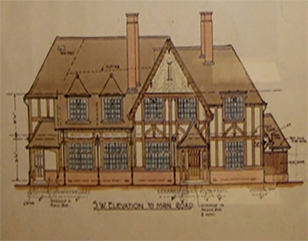
Sampson Society Appreciation Visit - 11 April 2013
In the early twentieth century Woolbrook consisted of 3 distinct settlements - Lower, Middle and Upper Woolbrook, each of them no more than a small hamlet.
All that changed in the years before the second world war. Arcot Park, designed by Sampson, had been built in the mid 1920’s and the Manstone estate followed in the 30’s. Small groups of houses sprang up along the Woolbrook Road during this period, such that by the early 30’s development was continuous between Lower and Middle Woolbrook.